Mixing Technology
 Environmental friendly
 Lithium battery
 Chemical Industry
 Catalyst
 Ceramic
 Medical Food
 Metallurgy
 Carbon
 Fertilizer
 Building materials
 Foundry Sand
 Welding Flux
 Glass
Glass Refractory
Development Trends of Intelligent Intensive Mixers in the Era of Industry 4.0
Release time : 2026-01-30
Development Trends of Intelligent Intensive Mixers in the Era of Industry 4.0
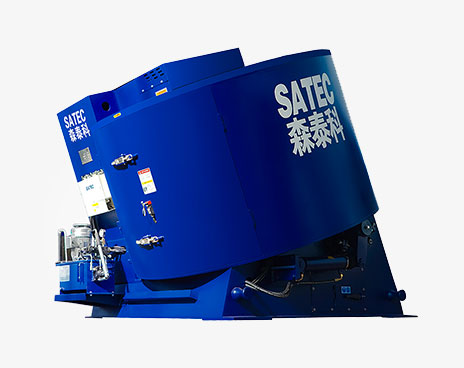
Against the backdrop of Industry 4.0 and intelligent manufacturing, traditional mixing equipment is no longer sufficient to meet the demands for high precision and high consistency. Intelligent intensive mixers are evolving through digitalization, automation, and system integration, becoming an integral part of modern factories.
I. From “Equipment” to “System”
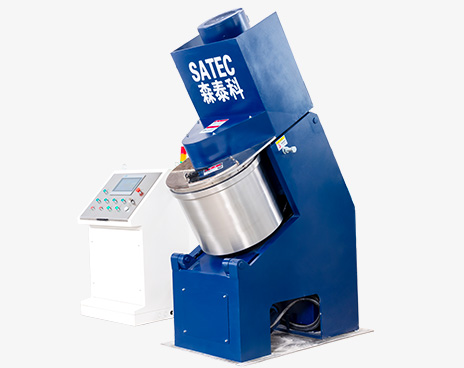
Next-generation intensive mixers are no longer just mechanical devices but integrated intelligent systems combining control, monitoring, and data feedback. Through PLCs, sensors, and industrial networks, the mixing process becomes fully visualized and traceable.
II. Online Monitoring and Closed-Loop Process Control
Key parameters such as torque, temperature, and motor current are collected in real time and linked to process models to enable dynamic adjustment of the mixing process. This closed-loop control significantly improves product consistency while reducing reliance on manual intervention.
III. Energy Efficiency and EHS-Oriented Design
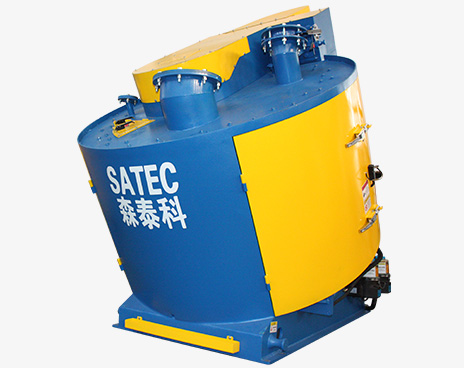
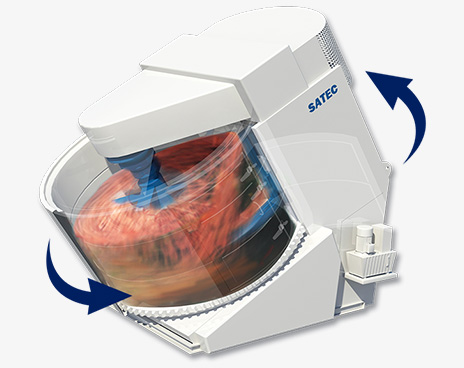
Enclosed mixing structures effectively reduce dust emissions, and when combined with exhaust gas recovery systems, dust discharge can be reduced by more than 90%. Meanwhile, intelligent variable-frequency control lowers overall energy consumption, meeting increasingly stringent EHS and carbon reduction requirements.
IV. Cross-Industry Application Prospects
From lithium batteries and semiconductors to chemicals and advanced materials, intensive mixers are serving multiple high-end manufacturing sectors with strong adaptability and broad application potential.
Conclusion
Intelligent intensive mixers represent not only an upgrade in mixing equipment but also a critical enabling technology driving industrial production toward digitalization and intelligent transformation.
Related content
Intensive Mixers for Refractory Materials
2026-01-15
satec intensive mixer
2026-01-16
Main Features of Foundry Sand Mixers
2026-01-30
Key Features of SATEC Foundry Sand Mixers
2026-03-05
QINGDAO SATEC ELECTRO-MECHANICAL TECHNOLOGY CO., LTD
24-Hour Service Hotline: 400-967-1990
Email:info@satecmix.com
Qingdao Headquarters:
Tel: +86 0532-87785677
Address: North End of Haier Avenue, Jiaozhou, Qingdao, SATEC, Qingdao, China
Related links
About us Technology/Products Industries Whole Plant Design Test Center News Contact usFollow us
 WeChat official account
鲁ICP备17014221号-1
© 2025 QINGDAO SATEC ELECTRO-MECHANICAL TECHNOLOGY CO., LTD