
Mixing Technology
 Environmental friendly
 Lithium battery
 Chemical Industry
 Catalyst
 Ceramic
 Medical Food
 Metallurgy
 Carbon
 Fertilizer
 Building materials
 Foundry Sand
 Welding Flux
 Glass
Glass Refractory
Unveiled! SATEC Mixers: The Backbone of Mass Production for Dry Electrodes and Solid-State Batteries
Release time : 2026-03-05
Unveiled! SATEC Mixers: The Backbone of Mass Production for Dry Electrodes and Solid-State Batteries
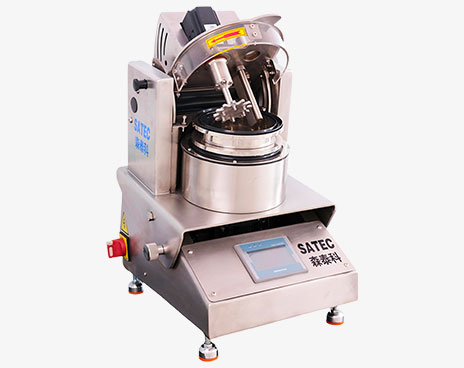
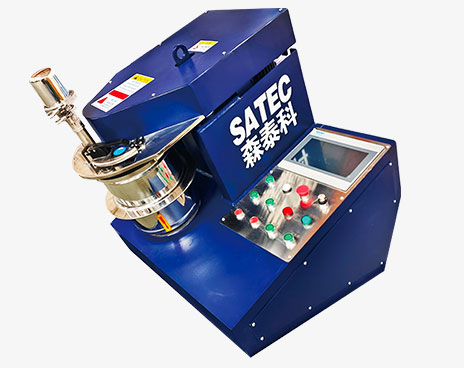
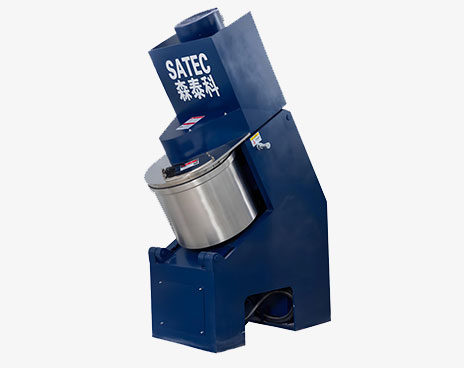
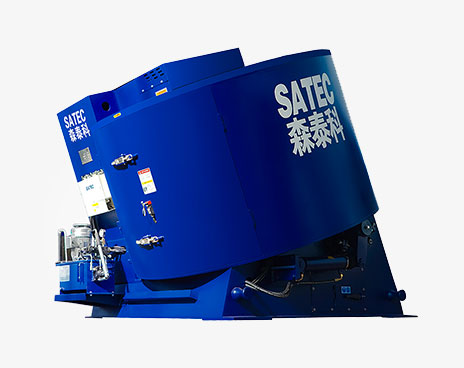
In the new energy battery industry's race toward high energy density, high safety and low cost, dry electrodes and solid-state batteries are undoubtedly the two most high-profile core development directions. The scaling of these cutting-edge technologies from laboratory research to large-scale mass production cannot do without a key unsung hero — the mixer. Unlike traditional mixing equipment, the mixer directly determines the electrode's microstructure, interface impedance and the battery's ultimate electrochemical performance, making it the fundamental equipment for the industrialization of next-generation batteries. Among such equipment, SATEC mixers, backed by German craftsmanship and customized technical advantages, have become the benchmark equipment adapted for the production of dry electrodes and solid-state batteries, deeply empowering the battery industry's technological upgrading and mass production implementation.
Today, we will dissect the core role of SATEC mixers in the production of dry electrodes and solid-state batteries, and explore how this industrial workhorse addresses industry pain points and helps the new energy industry break through technical bottlenecks.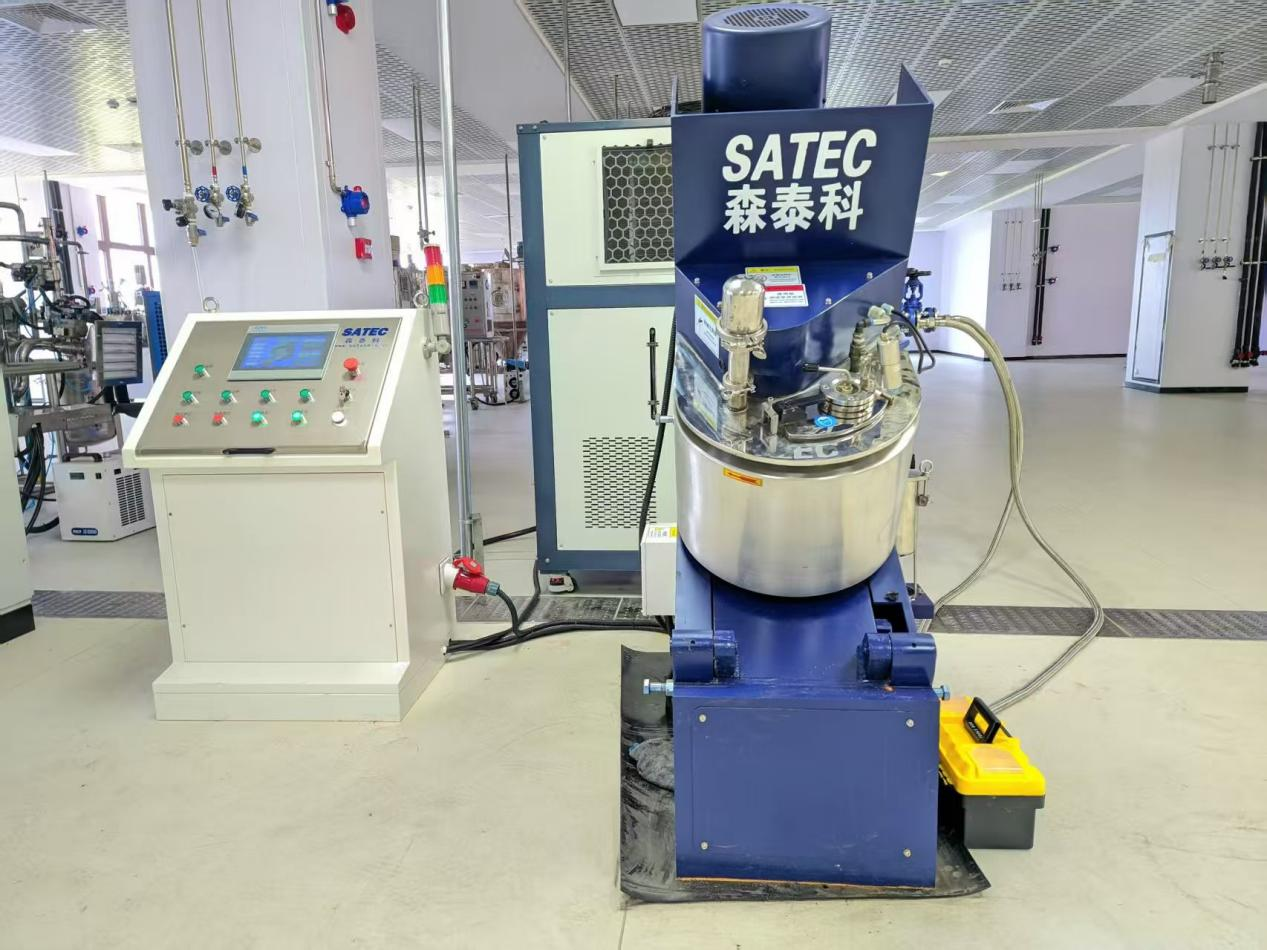
I. SATEC Mixers: The Core Enabler of Dry Electrode Mass Production
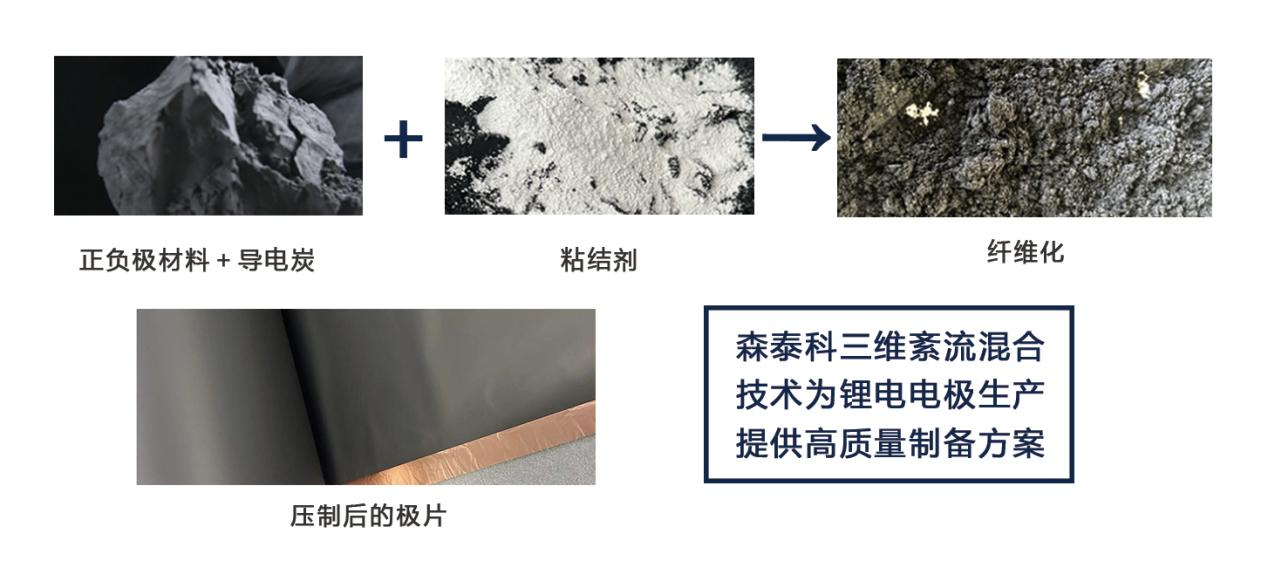
The core advantage of dry electrodes lies in being solvent-free and drying-free: the entire process involves direct powder mixing, fibrillation and hot-pressing into films, which places extremely high demands on the mixing equipment's dispersion uniformity, temperature control precision and fibrillation adaptability. With years of in-depth experience in the lithium battery industry, SATEC's high-intensity mixers precisely meet the production requirements of dry electrodes and undertake four core functions to solve the industry's key pain points.
1. Nanoscale uniform dispersion in solvent-free systems, eliminating agglomeration and delamination
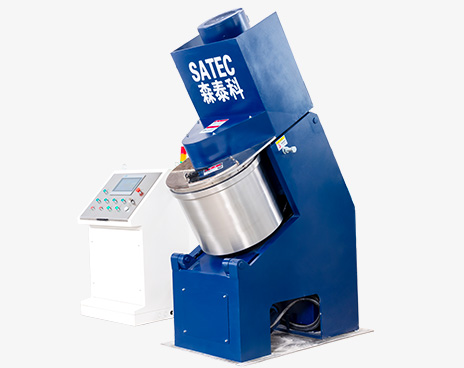
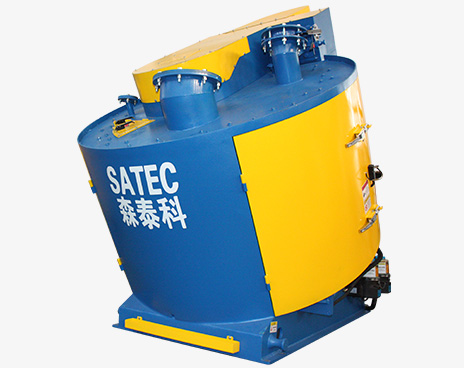
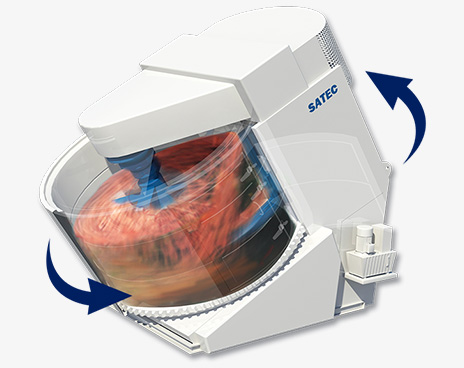
Without the assistance of liquid media, active materials, conductive agents and PTFE binders in dry systems are highly prone to agglomeration and delamination, which directly impairs the stability of electrode areal density and battery performance. SATEC mixers adopt an original 3D turbulent mixing mechanism; through the synergistic operation of planetary stirring blades and multi-dimensional rotating cylinders, materials move synchronously in the radial, axial and tangential directions, achieving a mixing uniformity of over 99.2%. They can efficiently break up nanoscale powder agglomerations, ensure the uniform distribution of all components and avoid local enrichment or binder deficiency, laying a solid foundation for the stable performance of dry electrodes. Meanwhile, its closed mixing process reduces dust emissions by 90%, aligning with the green production requirements of the lithium battery industry.
2. Precise regulation of PTFE fibrillation for a stable 3D framework
The strength of dry electrodes corely relies on the network framework formed by PTFE fibrillation, which requires the mixer to have precise shearing and temperature control capabilities. Through intelligent frequency conversion control, SATEC mixers can real-timely adjust rotation speed and mixing time; combined with a customized shear blade design, they precisely draw PTFE particles into uniform fibers that perfectly wrap and connect active particles, endowing electrode sheets with sufficient strength to achieve no powder shedding and rollability. This fully adapts to subsequent calendering and compounding processes, solving the industry pain points of uneven fibrillation and easy electrode sheet damage with traditional mixers.
3. Building a high-efficiency conductive network to enhance battery rate and cycle performance
The uniform dispersion of conductive agents (carbon black, CNT, graphene) is the key to improving battery rate performance and cycle stability. Poor mixing directly leads to local lithium plating, capacity fading and increased risk of thermal runaway. Through the synergistic mixing of macro convection, meso shearing and micro diffusion, SATEC mixers enable conductive agents to form a continuous and interconnected conductive network, effectively reducing electrode internal resistance. Combined with vacuum mixing technology, they achieve uniform coating of nanoscale conductive agents, further improving battery energy density and helping dry electrodes realize performance breakthroughs of high rate and long cycle.
4. Cost reduction and efficiency improvement to facilitate green manufacturing
Dry electrodes themselves eliminate solvent, drying and recovery processes, and as the only core front-end process, mixing directly determines production line yield and energy consumption. SATEC mixers are driven by servo motors, saving 40% energy compared with similar equipment and reducing per-ton processing costs by 28%, helping enterprises achieve the goals of over 30% energy consumption reduction, over 20% cost reduction and near-zero VOCs emissions. Meanwhile, their modular design supports quick replacement of wearing parts, shortening downtime by 60% to further improve production efficiency and lower the threshold for the large-scale mass production of dry electrodes.
II. SATEC Mixers: The Key Tool to Solve Interface Challenges of Solid-State Batteries
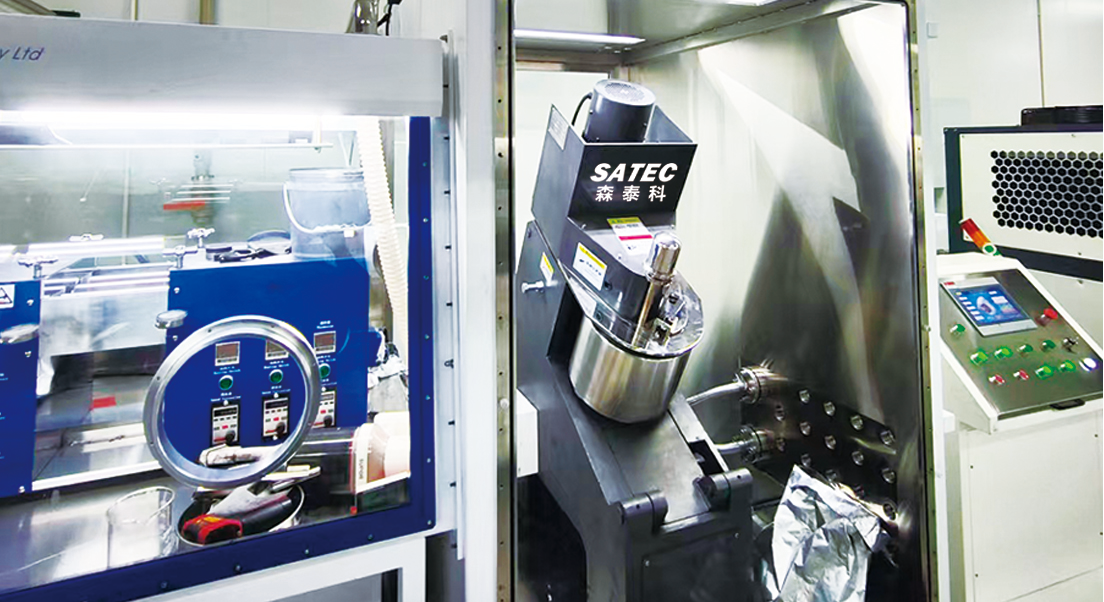
Solid-state batteries replace liquid electrolytes with solid electrolytes, completely resolving the safety hazards of traditional lithium batteries. However, the problems of poor solid-solid interface contact and low ionic conduction efficiency have become the core bottlenecks restricting their industrialization. Targeting the production requirements of solid-state batteries, SATEC mixers have optimized and upgraded technical solutions to address interface challenges from the process level and demonstrate their key value.
1. Realizing electrode-electrolyte composite homogenization to build dual ion-electron channels
The performance of solid-state batteries corely depends on the precise mixing of cathodes, solid electrolytes (sulfide/oxide/polymer) and conductive agents. Relying on 3D composite motion technology, SATEC mixers achieve accurate mixing of the three components, building a continuous dual ion-electron channel that effectively reduces solid-solid interface impedance and improves ionic conductivity.
2. Protecting sensitive materials and preventing side reactions
Solid electrolytes such as sulfides are prone to decomposition when exposed to water and solvents, and traditional mixing equipment can hardly avoid material contamination and side reactions. SATEC mixers adopt a dry closed mixing design, fundamentally preventing water and solvents from contacting sensitive electrolytes to avoid side reactions. Meanwhile, their mild and controllable shearing force prevents the breakage of electrolyte particles, preserves their electrochemical activity and adapts to the mixing requirements of various solid electrolytes such as sulfides and oxides.
3. Improving interface contact and compaction density to optimize ionic transport efficiency
Uniform mixing is the foundation for subsequent high-pressure calendering, directly affecting the contact area between electrodes and electrolytes. Materials mixed by SATEC mixers feature excellent homogeneity, providing a stable foundation for high-pressure calendering, ensuring tight adhesion between electrodes and electrolytes and enabling smoother ionic transport. This effectively solves the industry pain point of poor solid-state battery interface contact and provides support for the breakthrough of high battery energy density.
4. Adapting to high energy density demands and building a robust safety barrier
The core goal of solid-state batteries is to break through an energy density of 500Wh/kg while achieving higher safety, and mixing quality directly determines the realization of this goal. Through precise process control and a high-cleanliness design (mirror polishing, no metal contamination), SATEC mixers avoid short-circuit risks caused by impurity introduction and reduce the hidden danger of thermal runaway from the process level. Meanwhile, their wide temperature range design adapts to the mixing requirements of different sensitive materials, helping solid-state batteries achieve the dual breakthrough of high energy and high safety. SATEC mixers have been recognized by many domestic institutions of the Chinese Academy of Sciences, universities and leading battery enterprises.
 III. SATEC Mixers: Customized Solutions for Next-Generation Batteries
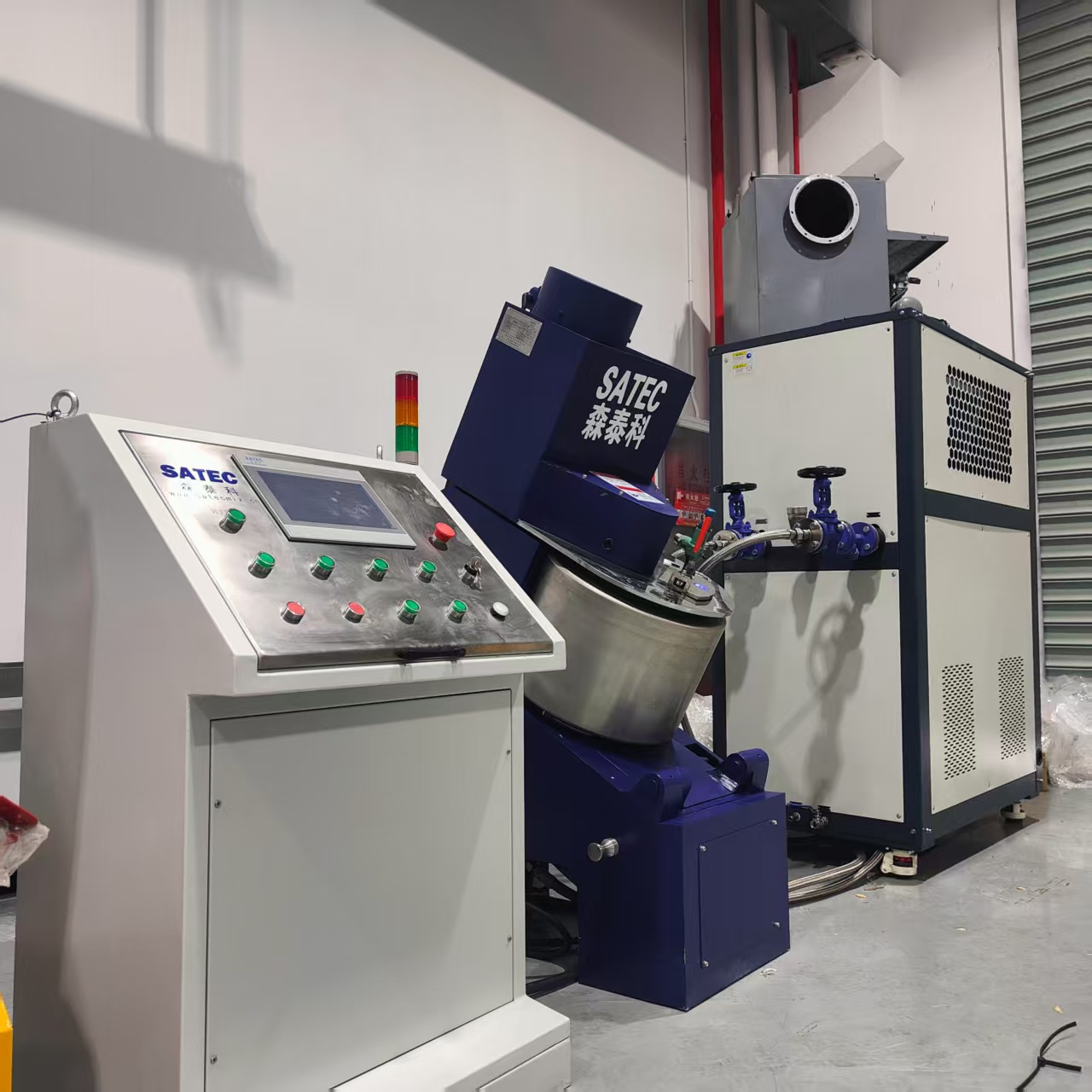
The large-scale production of dry electrodes and solid-state batteries places far higher demands on mixing equipment than traditional lithium batteries. With technological innovation and customization capabilities, SATEC mixers perfectly meet the high standards of the industry and become the first choice for next-generation battery production.
Its core advantages are reflected in six aspects:
High uniformity: Mixing uniformity ≥99%, meeting the mixing requirements of nanoscale powders;
Strong dispersion and anti-agglomeration: Efficiently breaking up nanoscale powders and high-viscosity materials;
Precise temperature control: Equipped with an independent temperature control box to protect binders and sensitive electrolytes, adapting to different process requirements;
Low residue and high cleanliness: No metal contamination;
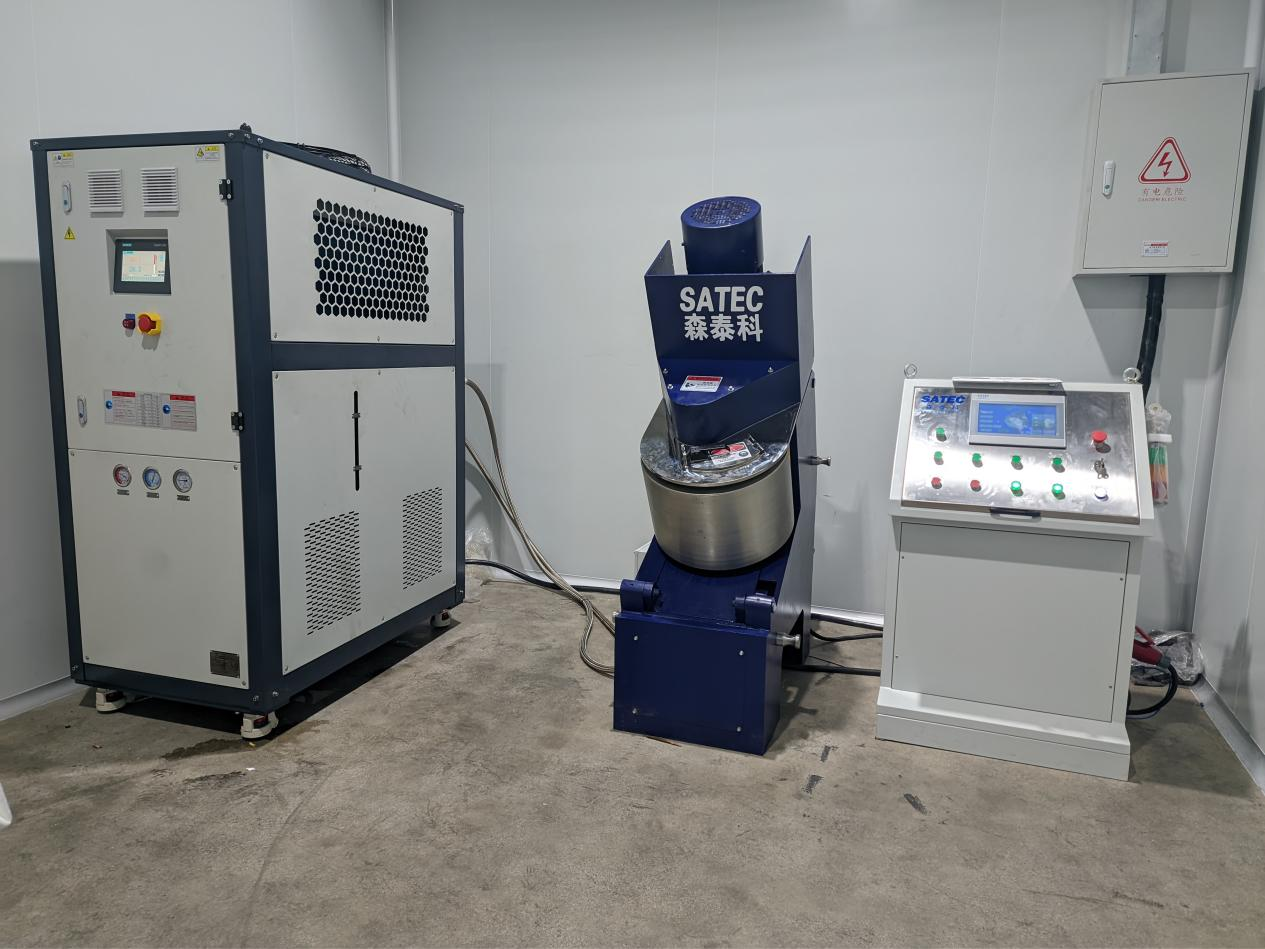
Scalability: Linear scaling from laboratory R&D to mass production, with a 30%-50% increase in single-batch processing capacity and excellent batch stability;
Customized adaptation: Providing an integrated solution of equipment + process package + digital twin, adapting to the PTFE dry binder system and the mixing requirements of various solid electrolytes.
 IV. Conclusion: SATEC Mixers Empower the Industrial Upgrading of Next-Generation Batteries
The competition in dry electrodes and solid-state batteries is essentially a synergistic competition of materials, processes and equipment. As the first core front-end equipment, the mixer directly determines the electrode's microstructure, interface quality and mass production stability. Backed by German craftsmanship accumulation, 3D mixing technology innovation and customized solutions, SATEC mixers not only perfectly adapt to the production requirements of dry electrodes and solid-state batteries, but also help enterprises reduce production costs, improve product yield and solve industry mass production challenges with the advantages of energy saving, high efficiency and stability.
With the continuous upgrading of the new energy industry and the accelerating industrialization of dry electrodes and solid-state batteries, SATEC mixers will continue to deepen its layout in the lithium battery field. With more advanced technologies and more comprehensive services, SATEC will help battery enterprises break through technical bottlenecks, promote the large-scale implementation of next-generation batteries with high energy density, high safety and low cost, and inject strong impetus into the high-quality development of the new energy industry.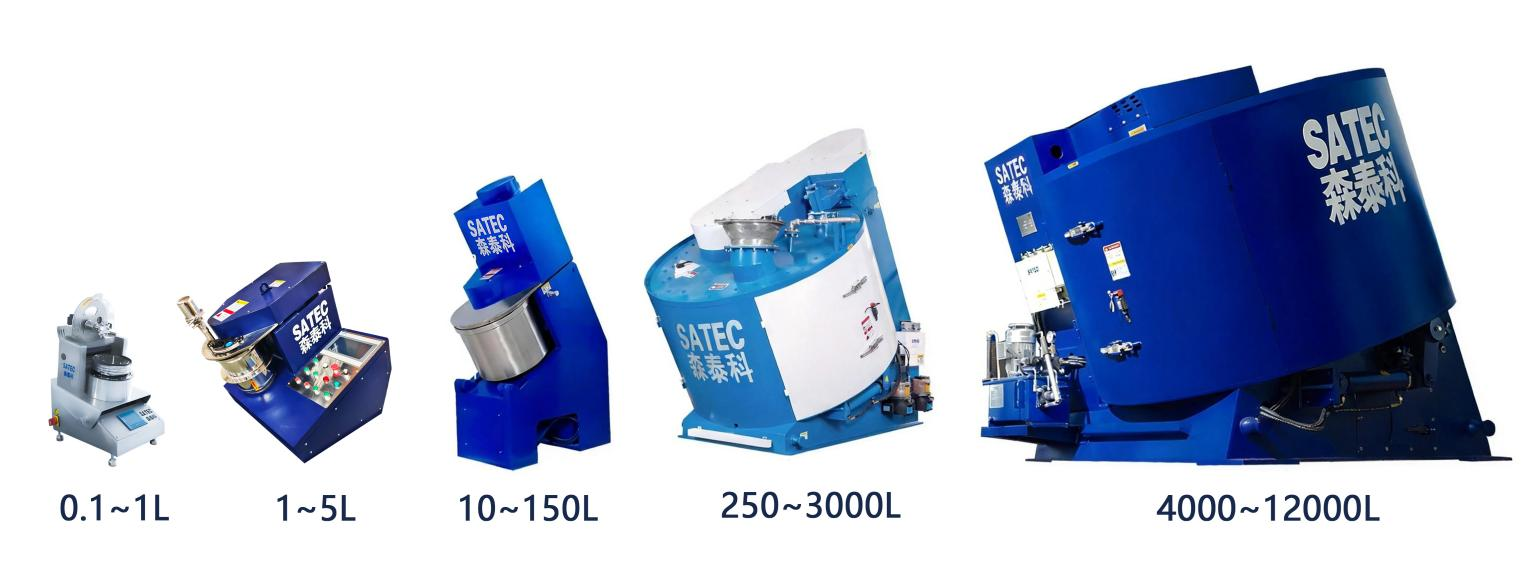
Related content
Intensive Mixers for Refractory Materials
2026-01-15
satec intensive mixer
2026-01-16
Main Features of Foundry Sand Mixers
2026-01-30
Key Features of SATEC Foundry Sand Mixers
2026-03-05
QINGDAO SATEC ELECTRO-MECHANICAL TECHNOLOGY CO., LTD
24-Hour Service Hotline: 400-967-1990
Email:info@satecmix.com
Qingdao Headquarters:
Tel: +86 0532-87785677
Address: North End of Haier Avenue, Jiaozhou, Qingdao, SATEC, Qingdao, China
Related links
About us Technology/Products Industries Whole Plant Design Test Center News Contact usFollow us
 WeChat official account
鲁ICP备17014221号-1
© 2025 QINGDAO SATEC ELECTRO-MECHANICAL TECHNOLOGY CO., LTD